
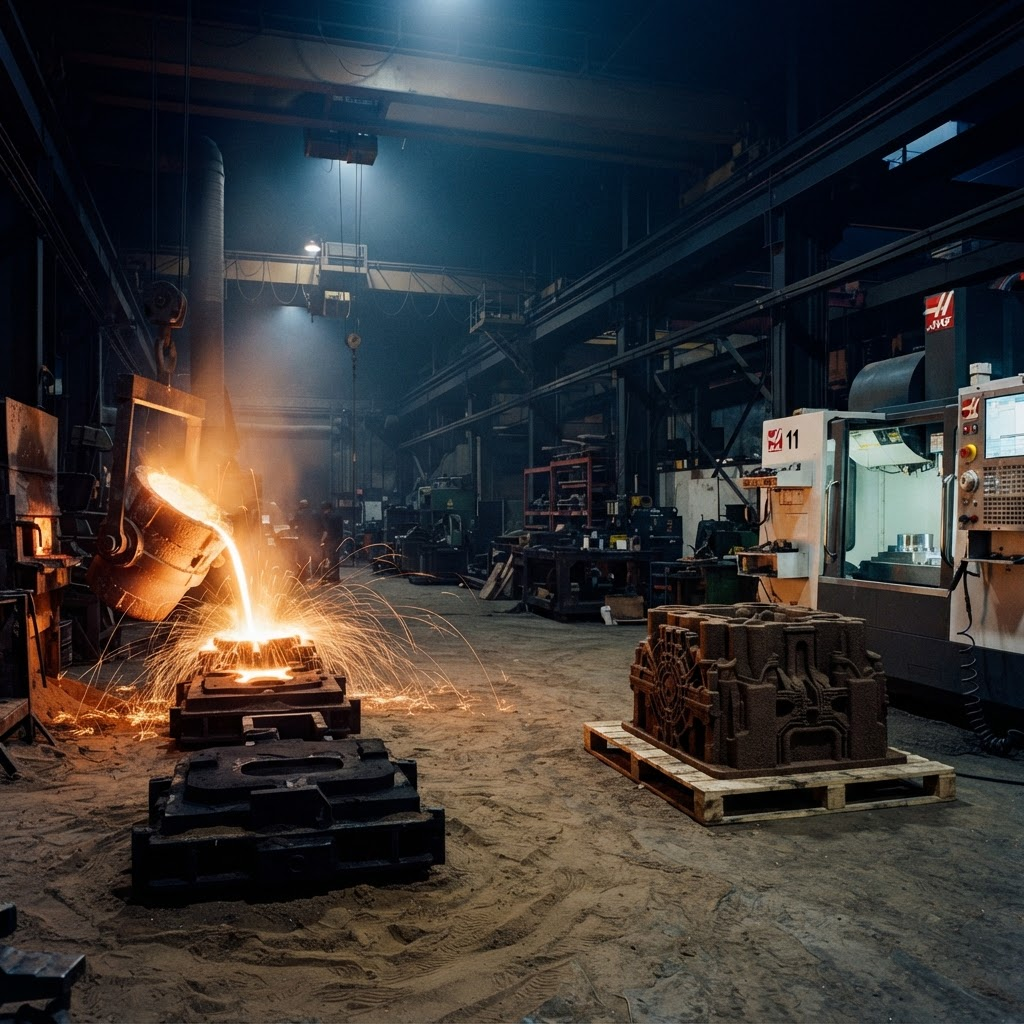
From Model to Cast
Scan it, simulate it, print the mold, pour it, heat treat it, machine it, certify it, ship it. Every step happens in our shop — as cast, rough machined, or finish machined, with the certifications to back it.
6,000 lbs
Induction melt per heat
150"
Floor molding, square
3
Molding processes
1
Roof over all of it
The Path
From Model to Cast
Eight stages, one shop. The first three are digital — the part is proven in software before any sand is packed or any metal is melted.
- 01Digital
Scan / Model
Start from your CAD, your drawing, or the part itself. A legacy casting with no surviving print gets 3D scanned into a workable model.
Detail - 02Digital
Simulate
MAGMASOFT predicts how the metal fills and solidifies. Shrinkage and porosity get found and corrected on screen — before anyone cuts tooling.
Detail - 03Digital
Print the Mold
Binder-jet sand printing produces the mold and cores directly from the model. No pattern, no pattern lead time.
Detail - 04
Pour
Induction melting to 6,000 lbs in bronze, aluminum, nickel, and Monel. Green sand for production, no bake for large and critical work.
Detail - 05
Heat Treat
Solution treating, annealing, and stress relief in-house — including the anneal that MIL-B-21230 requires for Navy nickel aluminum bronze.
Detail - 06
Machine
Rough or fully finished. CNC turning and milling by machinists who know how each alloy we pour actually cuts.
Detail - 07
Inspect & Certify
Chemistry and mechanical test bars, dimensional layout, NDT, and hydrostatic testing — with the paperwork to prove all of it.
Detail - 08
Ship
One purchase order, one point of contact, one shop accountable for the part from model to finished casting.
Detail
The loop closes. The finished casting goes back on the scanner and gets measured against the same model it started from — so first-article approval is a full-surface comparison to your geometry, not a handful of caliper readings.
Digital Engineering
The Front End of the Foundry
Three capabilities that decide whether a casting works before the first pour — and that most sand foundries still send outside.
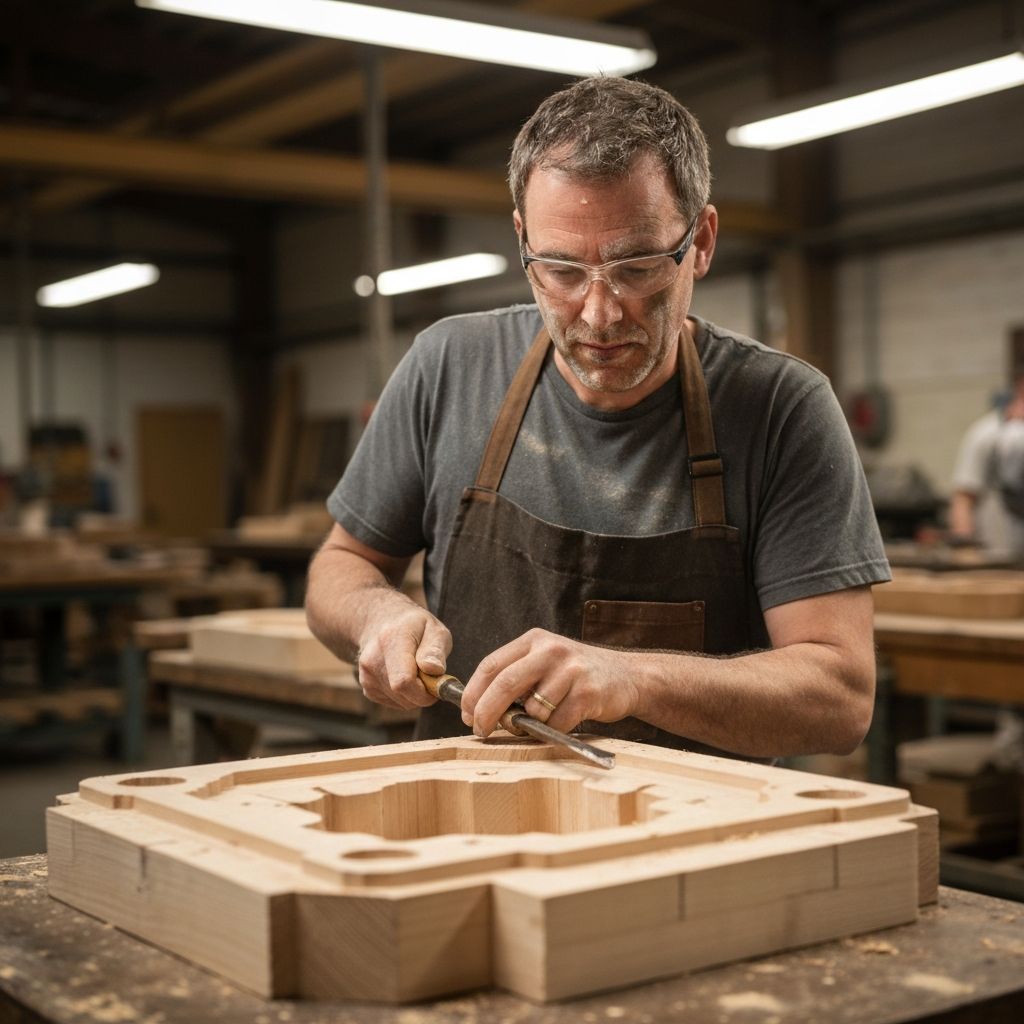 No tooling required
3D Sand Printing
Molds and cores printed straight from the model. Internal passages that cannot be conventionally cored, and first castings in days instead of weeks.
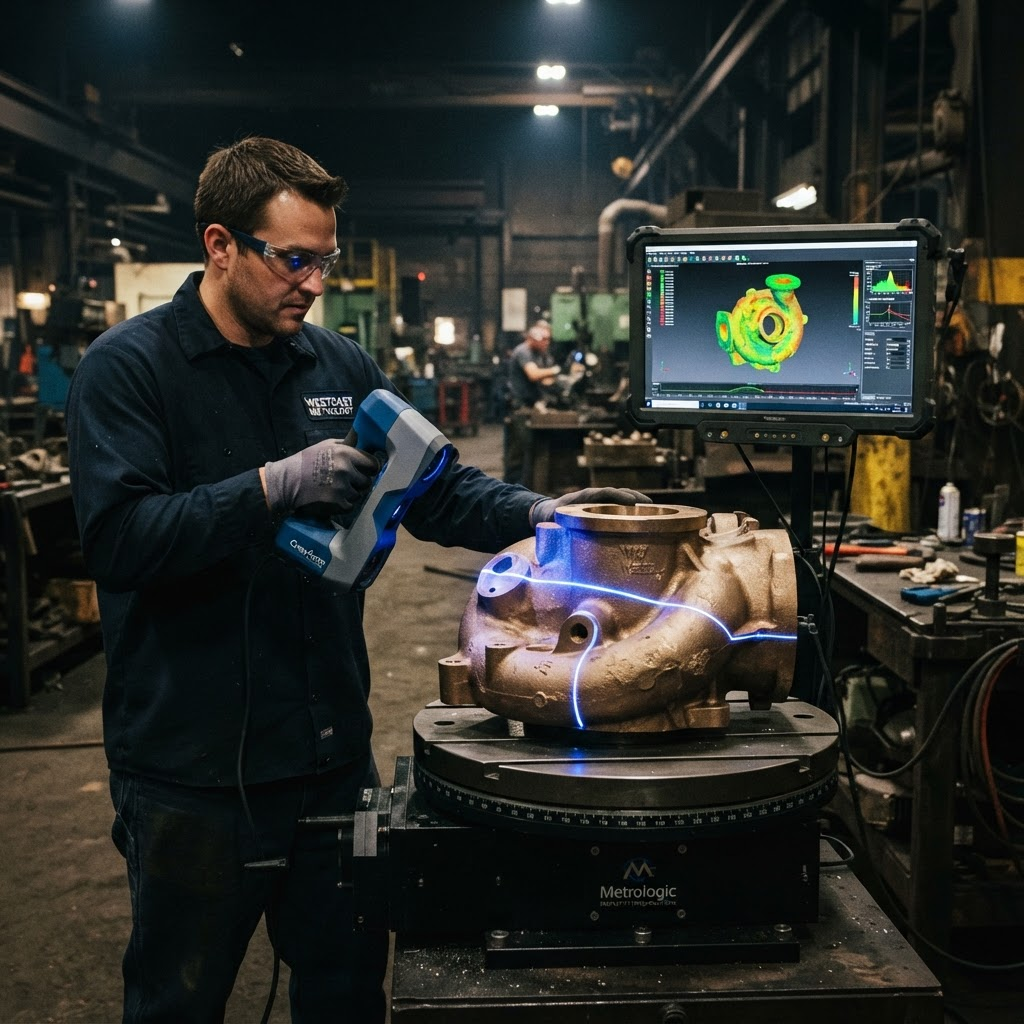 Reverse engineering & inspection
3D Scanning
Turn an obsolete part with no drawing into production-ready CAD — then scan the finished casting back against that model to prove it.
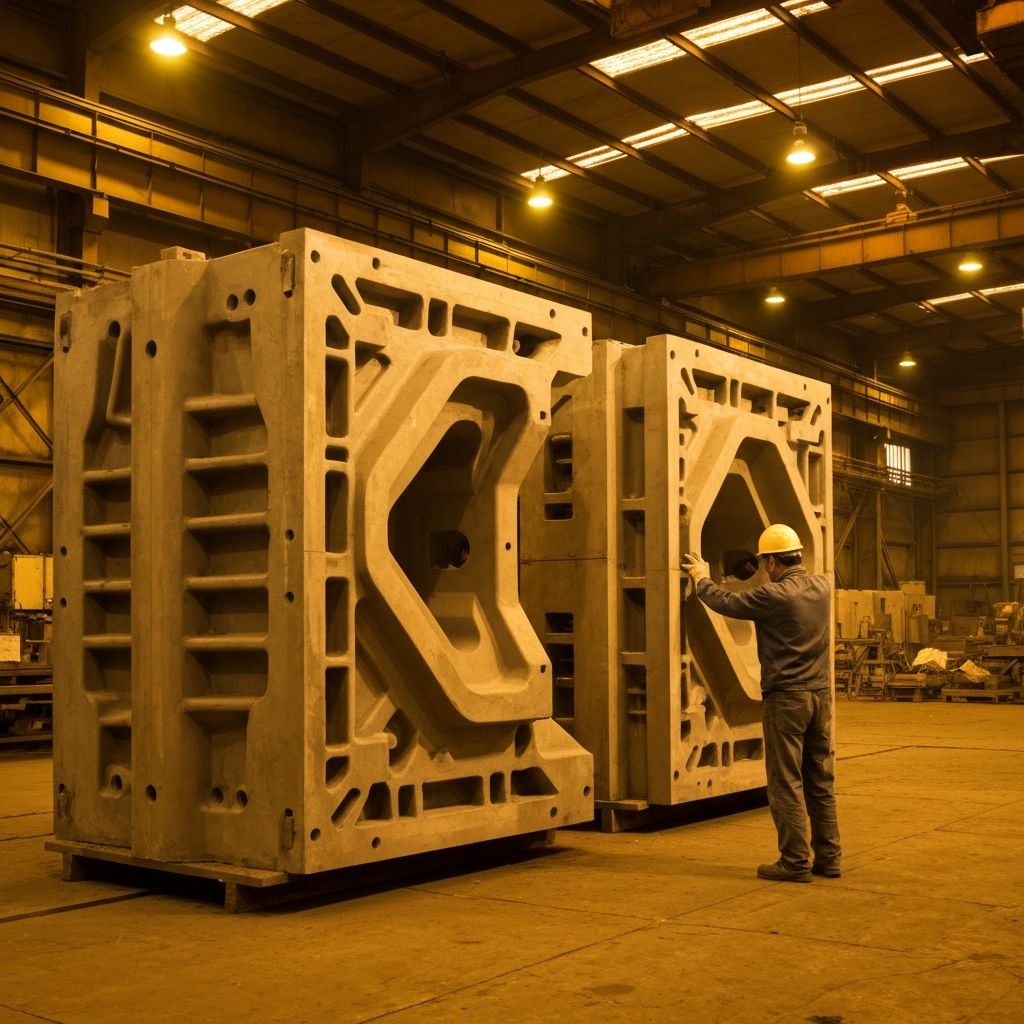 De-risk before you tool
MAGMA Simulation
Solidification and filling modeled up front. Gating and risering corrected in software, not discovered on the shop floor after a scrapped pour.
Every Other Step