Our Process
Skip the Pattern Entirely
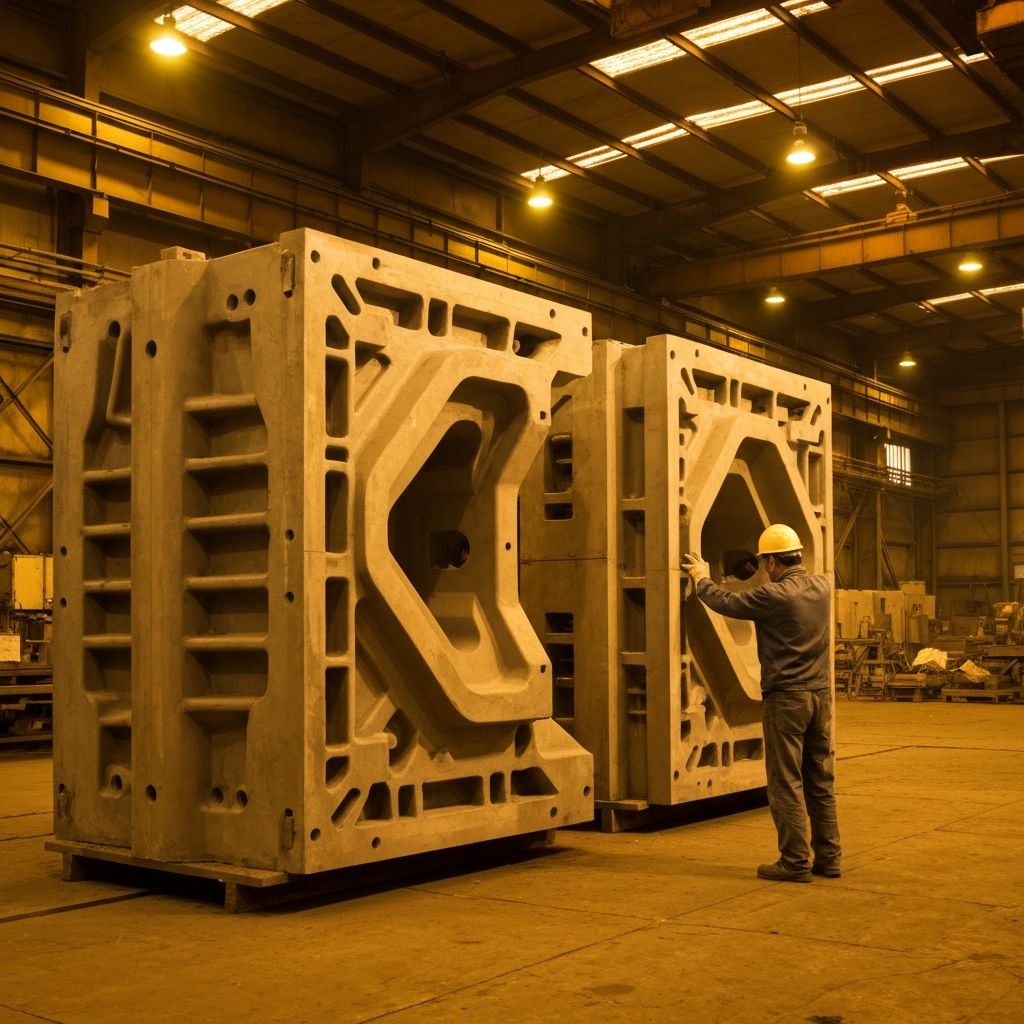
Building a pattern is usually the longest and most expensive step in getting a new casting made. Binder-jet printing removes it: the sand mold and its cores are printed as finished geometry straight from the model, then assembled and poured in our shop using the same alloys, the same furnaces, and the same certifications as production work.
Because the cores are printed rather than assembled, internal passages stop being a constraint. Water jackets, oil galleries, and valve internals that would take a stack of hand-set cores — or simply could not be done — come out of the printer as one piece.
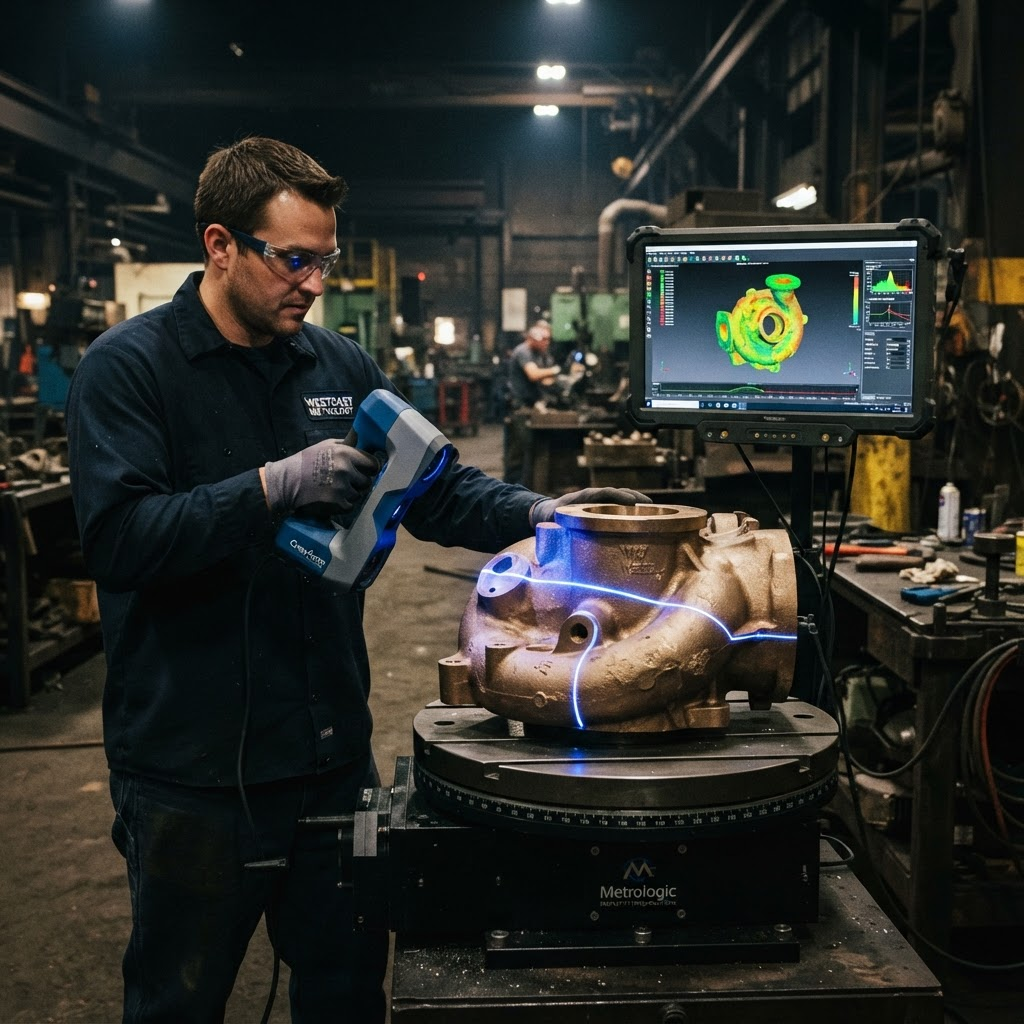
The model can come from you, or from us. If the part exists but the drawing does not, we scan it into CAD first. Either way our engineers design the gating and risering and prove the pour in MAGMA before the mold is committed to print.
Lead Time Advantage
Eliminate pattern fabrication lead time — prototype castings poured in days from your approved CAD model
Advantages
Why 3D Sand Molding?
No Pattern Tooling Required
3D printed sand molds are produced directly from CAD files — no wood or resin pattern needed. Eliminate pattern lead time and tooling cost entirely for prototype and short-run work.
Complex Internal Geometry
Binder-jet printing can produce mold cores that are impossible to make conventionally — intricate oil passages, undercuts, and compound internal shapes with no assembly required.
Rapid Prototype Delivery
First casting in days rather than weeks. 3D sand printing removes the longest lead time item — pattern fabrication — from the critical path.
Any Alloy We Pour
3D-printed sand molds are compatible with all alloys Ironbound pours — bronze, aluminum, nickel alloys, and Monel.
Specifications